


Tiktok Tarot Culture: Why Claiming with Positivity Doesn’t work?
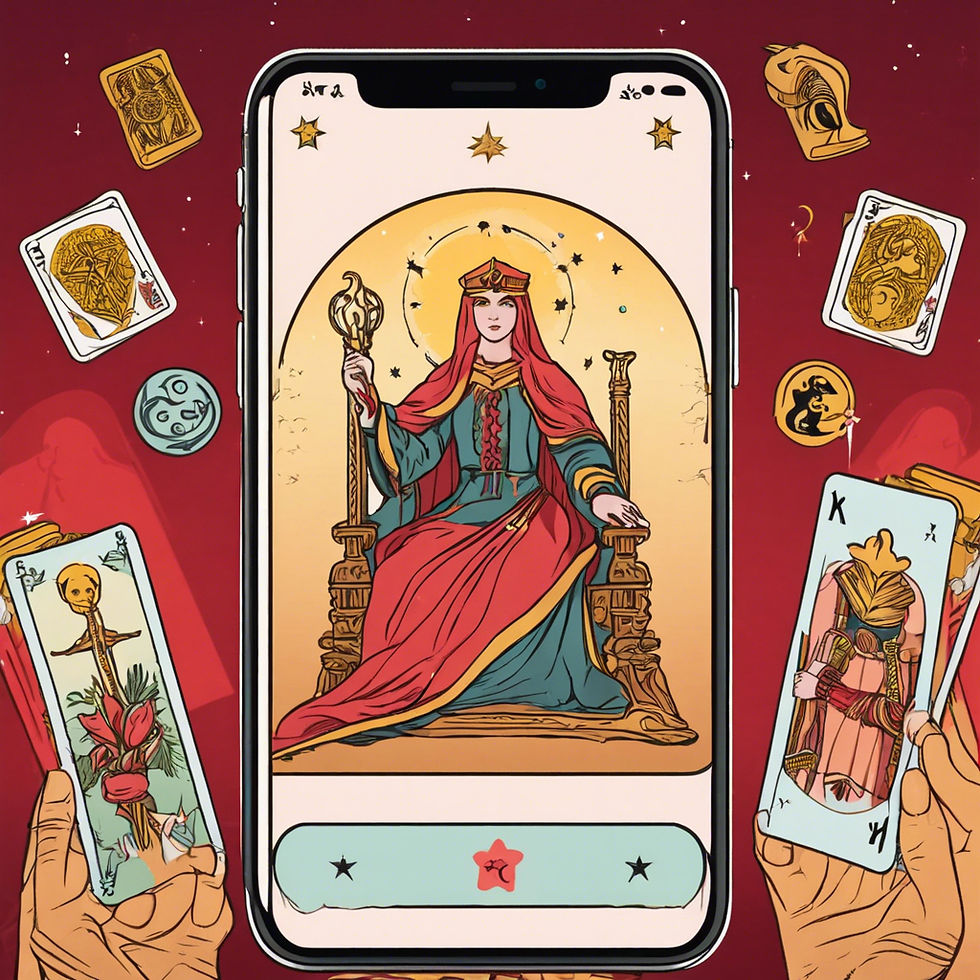
A tarot reading promising love came on your FYP? You might want to think twice before liking
"If you’re seeing this video, this message was meant for you” states a TikTok video on your For You Page. Tarot readings on TikTok have accumulated billions of views. According to the app, the hashtag TarotReading has almost 7 billion views and the hashtag Tarot has 23 billion views. These videos usually promise wealth, good energy or finding a soulmate.
“It'd be nice if they were meant to be, but the reason that we're seeing those TikToks is because somebody coded and wrote an algorithm that made it so that we saw that TikTok,” says Alisa Smith, a tarot practitioner for five years and a therapist.
Even though the algorithm decides what reading to show you, a TikTok user Adel Abdrakhimova believes these messages still find the right people. She got into tarot readings on the platform two years ago, as the pandemic hit the world.
“I think these videos come to those who really need it,” she says, “ I really felt better because I got to know the spiritual side of myself.”
Adel isn’t the only one who found spirituality on TikTok. With the uncertainty of the pandemic and the conflicts arising around the world, finding solace in tarot readings has become more common. At the start of the pandemic, TikTok grew by 75%, according to Forbes.
At the same time, the interest in tarot readings became more evident. At the time when everyone was stuck at home, people had more opportunities to self-reflect. Colin Wayne, a tarot reader for four years, has gained more than 270k followers on TikTok for his readings.
“When you're isolated, you're forced to spend time with yourself. That is a perfect opportunity for someone to awaken or maybe hear the thoughts that they haven't heard before. A lot of mysticism and divination such as tarot encourage self-discovery and self-healing,” he says.
Alisa thinks that the popularity of tarot has to do with human nature to search for certainty. In the times when wars break out and pandemic sweeps across the world, finding an answer could be a source of comfort.
“I think during times of uncertainty, people are really scrambling to find any sort of like foothold stability. And so they're looking towards taro, not so much as this reflective introspective tool, which is what it is, but as something that they can use to feel a little bit better about tomorrow,” adds Alisa
The problem lies in the misinterpretation of tarot as a fortune-telling device. Some users see it as set-in-stone predictions. What tarot provides is an insight into the self and the guidance to get to the desired outcome.
“If I use the cards to predict the end of the war, there's no way that me believing that with all of my heart is going to make it happen”, says Alisa, “but if I have a card and I believe in it with all my heart, that I'm going to do better at my next job interview, then it might lead me subconsciously to prepare better and whatnot.”
But the danger comes from readings that promise certain outcomes in return for likes and comments. Skipping a video could risk a bad fortune.
‘Claiming with positive energy’ read comments under many tarot readings. Users ‘claim’ a reading, hoping it would help it come true.
“I like to encourage not claiming at all. I think that a lot of people feel like claiming is something that you have to do to like lock it in into your reality,” says Colin.
“TikTok has created a stigma around tarot readings where I guess you could manifest something negative or you could manifest a reality that is unhealthy for someone. It's not ethical because I believe that no reading is meant to give you anxiety. All readings are meant to guide but I will say you can't guarantee that every tarot reader is coming in posting with that same intention,” he adds.
The promise of meeting a twin flame or soulmate, ex returning to your life and finding one true love all could be misleading. Colin suggests avoiding creators that encourage ‘claiming’ energy and double-checking the meaning of the cards.
Alisa agrees: “That really reminds me of OCD. You're promoting some sort of ritual in order to save this person from this horrific thing that could happen. So what if the tarot reader then goes, ‘oh, well, you have to pay me $5 in order to claim this’. It just becomes very manipulative.”
The risk of anxiety developing into OCD isn’t far-fetched. Michael Nielsen, a professor of psychology of religion at Georgia Southern University, says there is a delicate balance between a healthy practice going into an unhealthy realm.
“Anxiety can sometimes lead to a religious obsessive-compulsive disorder called scrupulosity. The individual may need reassurance that they're on the right path by engaging in the practice. But the highly anxious person never gets enough reassurance.”
Relying on tarot readings for a sense of stability could be dangerous. It could also be helpful if readings are not taken too seriously. Alisa and Colin tell us to take the tarot readings with a ‘grain of salt’.
Colin says: “The truth is not every reading is going to connect to everybody and not every reading is going to be meant for everybody. Personally, as a reader, I like to encourage others to use their discernment. And there's the common phrase that goes 'take what resonates with what doesn’t’.”
TikTok tarot reading might not be a guarantee of great things happening but it can provide helpful insight into your self. So next time you scroll through TikTok and see a reading, do not be alarmed. Your future is still in your own hands.


Comments